Wood on the Downs: Paul Nash Artist Profile
An artist profile. Article found in The Guardian:
Paul Nash is arguably the greatest war artist Britain has produced. The works that first earned him real renown, We Are Making a New World and The Menin Road, are iconic images of the trenches: with their splintered tree stumps and lumpy mud seas, they shockingly captured the annihilation of nature at bomb-blasted Ypres and Passchendaele. Nash found a new style of art to represent a new horror. Two and half decades later, more esteemed than ever and a war artist once again, he painted the unforgettable ocean graveyard of crashed German planes, Totes Meer.
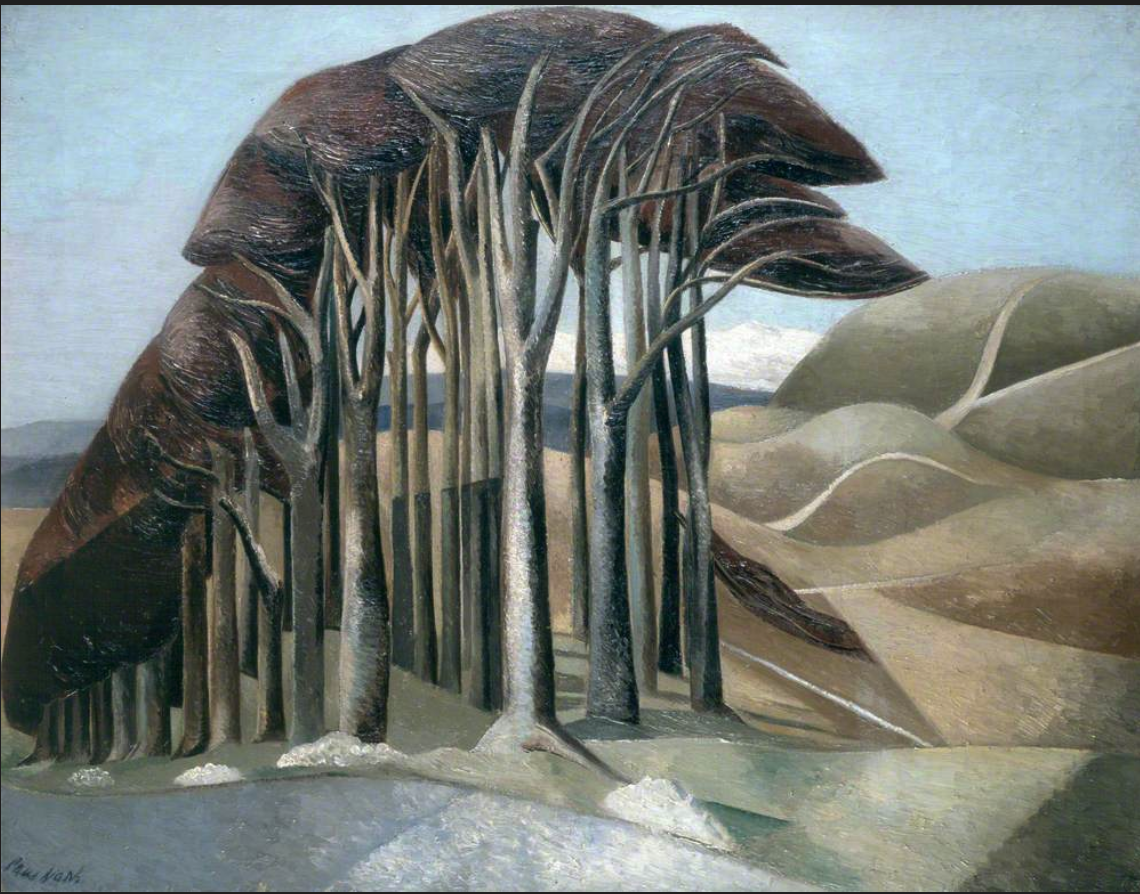
Nash is also one of the most interesting British landscape painters of the 20th century, much loved for his pictures that divine the “spirit” of Avebury, Wittenham Clumps and other English places with which he felt a strong, almost mystical, connection. His work Wood on the Downs (1929), a study of beech trees and chalklands, has been subject to constant reproduction since first exhibited, and its popularity is unsurprising: it is a hugely pleasing coming together of Englishness and modernistic art. His pictures found a refreshing, contemporary way to express a deeply felt communion with the English countryside – trees, paths, birds, hills.